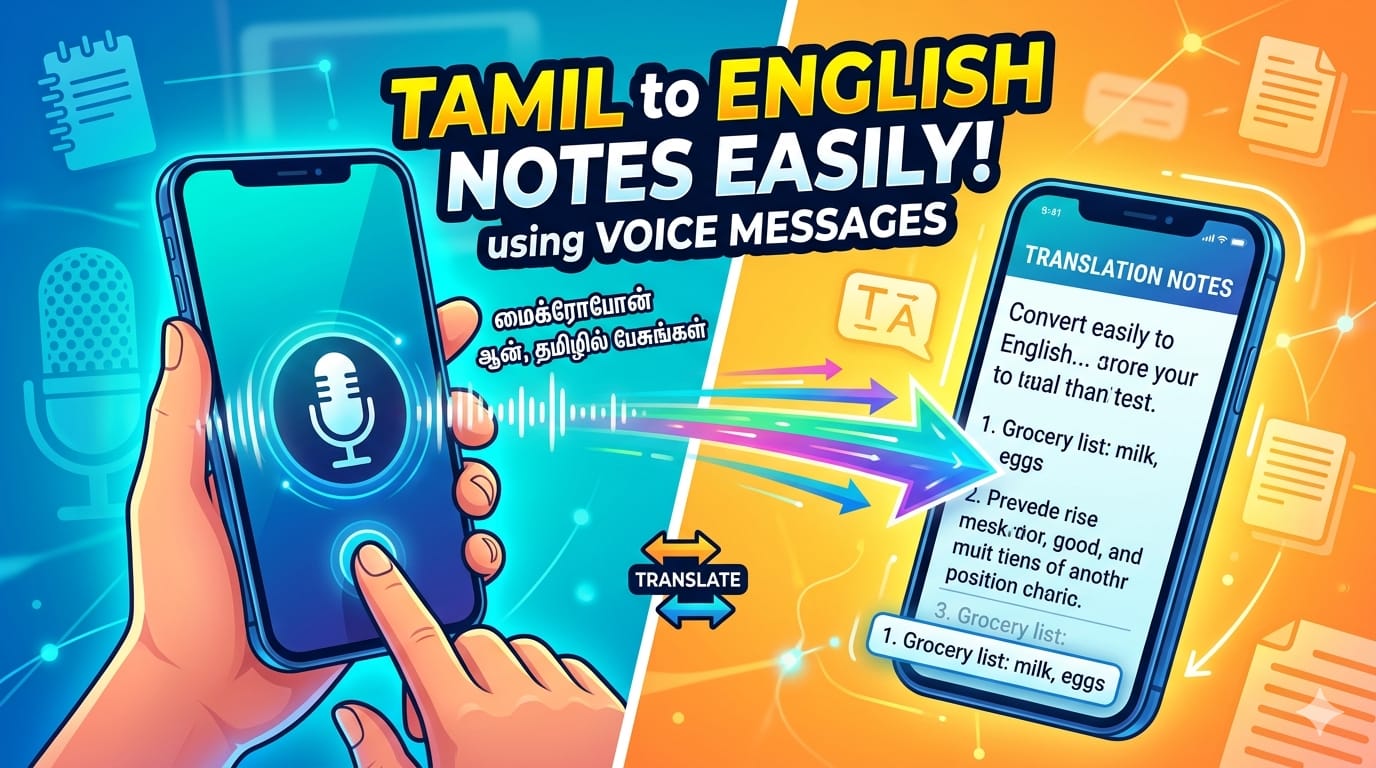
Using Voice Messages to Translate Notes from Tamil to English Easily
The translating notes quickly has become an important need for students, professionals, and content creators. Many Tamil speakers often write or record ideas in their native language but require English versions for studies, work, or online sharing. Voice message technology has made this process faster and more convenient than traditional typing methods.
How Voice Translation Works
Voice translation tools use speech recognition and artificial intelligence to convert spoken Tamil into written text and then translate it into English. Users simply record a voice message in Tamil, and the application automatically detects the language, transcribes the speech, and provides an English translation within seconds. This reduces manual effort and saves valuable time.
Benefits of Using Voice Messages
One of the biggest advantages of voice-based translation is speed. Speaking is naturally faster than typing, especially for long notes or explanations. It also helps people who are not comfortable typing in Tamil keyboards. Voice messages allow natural expression, capturing tone and meaning more accurately compared to manually typed translations.
Useful Situations for Students and Professionals
Students can record class notes or revision points in Tamil and instantly convert them into English study material. Professionals can translate meeting ideas, reminders, or project notes while traveling or multitasking. Content creators can also prepare scripts by speaking freely in Tamil and quickly generating English captions or articles.
Popular Tools Supporting Voice Translation
Several modern apps support voice-to-text and translation features. Tools like Google Translate, voice typing keyboards, and AI assistants provide reliable Tamil-to-English conversion. Many of these applications work directly on smartphones, making translation accessible anytime and anywhere.
Tips for Better Translation Accuracy
Clear pronunciation improves translation quality. Speaking at a moderate pace and avoiding background noise helps the software recognize words correctly. Short sentences often produce more accurate translations compared to long, complex speech. Reviewing the translated text once ensures clarity and correctness.
The Future of Voice-Based Note Translation
As artificial intelligence continues to improve, voice translation will become even more accurate and natural. Future tools may understand regional accents better and provide context-aware translations that feel more human. This technology is expected to play a major role in education, communication, and global collaboration.Many Tamil speakers want to communicate fluently in English but feel nervous while speaking. The truth is that learning English does not require perfect grammar at the beginning. Confidence, daily practice, and simple communication are the real keys to fluency.
Think in Simple English &Use Daily Conversations
The biggest mistake learners make is translating every sentence from Tamil to English in their mind. Instead, try thinking directly in simple English words. Start with daily sentences like “I am going,” “I will eat,” or “I am working.” Small sentences build strong speaking habits.English improves faster when used in real-life situations. Speak English while doing daily activities such as shopping, watching videos, or talking with friends. Even speaking alone in front of a mirror helps improve pronunciation and confidence.
Focus on Listening First & Practice Without Fear
Listening is the foundation of good communication. Watch English videos with subtitles and listen to slow English conversations. Pay attention to how words are pronounced and how sentences are formed naturally.Fear of making mistakes stops many learners from speaking. Mistakes are part of learning any language. Speak freely without worrying about grammar perfection. Every mistake teaches something new and improves fluency step by step.
Learn Common Everyday Sentences &Build Confidence Slowly
Instead of memorizing difficult vocabulary, learn commonly used sentences. Daily expressions like greetings, asking questions, and giving responses help in real conversations. Practical English is more useful than textbook English.
Fluency does not come in one day. Practice a little every day for at least 10–15 minutes. Gradually, speaking becomes natural and comfortable. Confidence grows when practice becomes a daily habit.
Conclusion
Using voice messages to translate Tamil notes into English is a simple yet powerful solution for modern communication needs. It saves time, reduces effort, and allows users to focus on ideas rather than typing. With the growing advancement of AI tools, voice translation is becoming an essential everyday productivity method.